 ManageEngine Thailand Community by KTNBS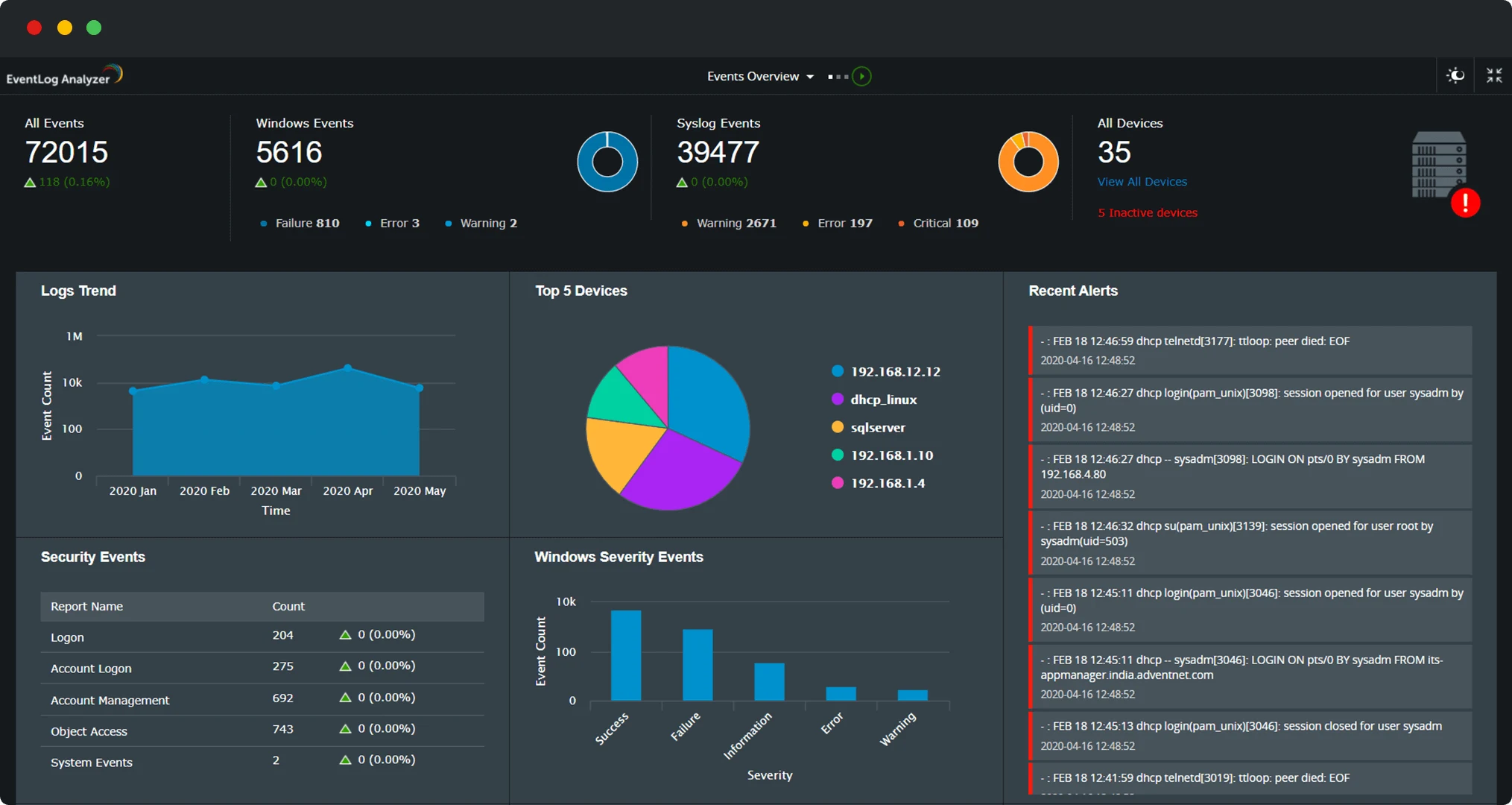
Quick answer
Start with investigation questions, log sources, reliable time, restricted access and approved retention. Rehearse a synthetic event search; collection alone does not establish investigation readiness or compliance.
Large log volumes do not guarantee usable evidence. Unsynchronized clocks, missing sources, and unowned reports can prevent a coherent incident timeline. Excessively accessible logs can also become a new information exposure.
Start with investigation questions
EventLog Analyzer provides log collection and analysis. Identify questions such as who signed in and when a significant change occurred, then map the systems providing those records. Verify supported formats and collection methods rather than assuming installation automatically covers every source.
Make timestamps and access dependable
Define synchronization and time-zone handling. Detect collection delays and interrupted sources. Restrict viewing and export by role. Avoid recording passwords, tokens, or unnecessary personal content. Set retention according to organizational requirements rather than copying a generic example.
Exercise the evidence workflow
Create an approved test event with a known time and outcome. Verify collection, search, correlation by the investigator, and escalation. Document missing evidence. Repeat permission checks with another role to confirm access boundaries.
Implementation checklist
- Assign ownership for every required log source.
- Check timing, continuity, and collection delays.
- Restrict viewing, export, and configuration changes.
- Practice investigations and record evidence gaps.
Measure source coverage, investigation effort, and detectable test events rather than stored volume alone. Use synthetic data and different roles in the demonstration.
A scenario to take into your evaluation
Generate a synthetic sign-in event and trace its timestamp, source and evidence-access permissions.
This is a proposed test, not a measured result or customer endorsement. Record the actual platform and edition, owner, expected result and observed outcome before expanding scope.
| Preparation | Decision evidence |
|---|---|
| Generate a synthetic sign-in event and trace its timestamp, source and evidence-access permissions. | Observed outcome, expected outcome and recorded limitations |
| Assign ownership for every required log source. | Named owner and acceptance criteria agreed before the pilot |
Should every log be kept forever?
Use a justified retention policy with controlled access and organizational deletion procedures.
Is log management identical to every SIEM capability?
Product and module scope differ. Verify required capabilities against the proposed configuration.
What evaluation scenario should we prepare for this topic?
Generate a synthetic sign-in event and trace its timestamp, source and evidence-access permissions.
Sources
- EventLog Analyzer2026-10-02
Prepare your discussion with the team
Share your problem, user or device count, existing environment and test scope so the team can assess fit and prepare a quotation. Serving Thailand, with a focus on Bangkok and its metropolitan area.
Request a quotation Request a demo